Friday, March 6, 2015

Not Even a Year


Noted '70s dick, Charlton Heston

Not even a year since my last post, so I'm in no rush.

About a year ago, I binged on 1970s movies: Deathrace 2000, Earthquake, Airport 1975, King Kong,...and oh yeah: Silent Running. There's so much to say about these movies, and a bunch of notes were hammered out.

By a year from now, maybe, I'll have turned the notes into posts.

Maybe.

PS. Just now, choosing labels for this flimsy excuse of a post, I realized that I have never used "procrastination."  Gotta admit, I'm feeling pretty proud of myself at this moment, won through so much hard-fought procrastination, with plenty more where that came from.
Goodbye.

Wednesday, July 9, 2014

As Fake Names Go...


One of the schticks on this blog has been harping on actors and others who change their names. If I weren't such a procrastinator, another gripe-post would concern Fresh Air, Terry Gross' middlebrow show on NPR, in which she asks rambling, two-minute questions with yes-or-no answers, interspersed with her "I'm indulging you" phony-sounding forced laugh.

But I am not a committed critic (read: die-hard hater), and can admit that sometimes I find Terry's show entertaining or informative, and that now and then there is a name-changer worthy of respect. Even though I find Fresh Air's tendency to rush to broadcast re-runs of interviews with the recently deceased to be gross, her stale airing of an old interview with the barely cold Paul Mazursky was a rare confluence of a good episode and a great re-naming.

I guess I've been aware of some things Mazursky did, without really being able to name him. The interview fleshed out this husk of awareness, and I liked the guy, not least because he sounded genuinely interested in looking for deeper meaning, "Even though I don't expect an answer," he said, after admitting to seeking out religious experiences ranging from Catholic Mass to taking ayahuasca in Peru. He was a great interviewee, picking up threads, finding laughs, opening up without becoming maudlin or confessional. He was funny, several times making Ms. Gross erupt in unmistakenly genuine laughter, giggles even.

Then came the kicker. He was not born Paul Mazursky. It's a stage name. But not one that sought to hide his Jewish heritage, one that during a substantial portion of his career also had the handicap of sounding Russian, or some kind of commie Eastern European. No, he was born a Mazursky. Irwin Mazursky, which he changed to Paul. He kept the foreign/Jewish surname, and replaced one non-descript  moniker for another. Great sense of humor, no sense of shame, and for that, I applaud this guy who I never paid that much attention to while he lived.

Sunday, February 23, 2014

Meet the Meat Puppets

Cris Curtwood and Curt Criswood, the Brothers Kirkwood

Just last month, Procrastacritic glanced away from TV and TV-grade cinema to take up music, to the surprise and delight of none. Seems like the perfect time to respond with another D-flat foray. Also, an opportunity to expound on family and freedom.

The Meat Puppets came to my attention in 1984 or so, when I was a college radio station DJ at WAMU, then wired into the dorms and thus free of FCC regulations. The previous year, I'd used that freedum to play a shitload of "fuck"-ridden punk rock songs, but with a new and rotating caste of co-hosts, I explored the stacks of LPs and branched out a bit. Still in the thrall of hardcore, though, I'd pull out punk-sounding names only to be led astray, inadvertently hypnotizing myself with the Stranglers and floating away on the melodic riffs of the Meat Puppets.

Today, my daughters are a bit horrified/scandalized by the Meat Puppets' moniker, but not entirely immune to the instrumental flow of "I'm a Mindless Idiot" and other songs on an ipod. Back then, it was "Up on the Sun" on vinyl, which of course I stole from the station, rationalizing that nobody else appreciated it.

Multi-generational Kirkwoods, and Da Drummer. Enjoy that spotlight, Elmo.
Fast forward to now. Or a few months ago, which is Now in procrastincation time. I had once again finagled fieldwork in reach of civilization, featuring a concert by the Meat Puppets, alive and kicking (and, incidentally, DJ Bonebreak of X drumming for the opening act!). So alive, in fact, that the Puppets demonstrated reproductive fitness and evolutionary success in the form of a Kirkwood son playing with the band. More on the possibly moron son later.

But in the meantime, let's talk about UNcle Cris, on bass. Probe the internet, and you'll find all kind of stories about his ups and downs, but when I saw them, I hadn't peeked. All I saw was,....HOLY FUCK! A kickass player. Way into it, way good. A face lined by experience beyond mere age, he looked like fucking Charles Bronson, defying death, blasting out the beat, iron-man stomping across the stage. Seriously, looking on from right in front of the stage corner, all I could do half the time was stare past his brother on guitar (no mean feat, given the 6-string antics) and bask in the thrall of a giant. He looked like he'd picked up a full-on acoustic bass like it was a guitar, plucking the hell out of it. He laid waste to complacency.

Meanwhile, the guitar. Uncle Curt, melodizing. Chill. No rock-star clothes, just sweats and shoes worn comfortable by years. Fingernails glowing in whatever lights the house had going as they danced across the frets.

And on 2nd guitar, Kirkwood son Elmo. For some reason, he had fairly consistent banter-beef going on with the audience on that side. Maybe there was some obnoxious fan settng him off, but from my end, I had to wonder why he was so fucking belligerent. I mean, you're 20-something, it's the 21st century, and you're making a living playing music, which is kindof a miracle. Thank your dad and uncle for their decades of setting the stage, and deal with being 2nd or 3rd banana, kid. Yes, people are there to see your old man, and yes, you can play those riffs too (maybe), but no, you are not lead. Play rhythm and thank your lucky stars. 

Wednesday, January 29, 2014

Matchstick Men in Picture and Song

Matchstick men in fluid convergence

I was not quite 3 years old when Status Quo released their song "Pictures of Matchstick Men." Not quite 3 years into college (a time I refer to as my Second Sophomore Year), I heard the Camper Van Beethoven version. I love both, and not quite 3 decades later, it's about time to tackle the topic here.

In the usual google lead-up, I learned that there is a Nick Cage (not his real name) movie called "Matchstick Men," but I've never seen it, and cannot stand that guy. So much so that I will not succumb to the temptation to snark the hell out of him. Nick who? I forget, except for the withered appendix of my memory that still hates him for turning into such utter shit after getting my hopes up with Raising Arizona.

The other web-search surprise was learning about L. S. Lowry, the British artist whose paintings were chock full of angular people who came to be termed "matchstick men." I've not read art critics take him on, but wikipedia implies that quite a few of them wrote him off as a naive, not highly accomplished, artist of the ilk that insiders like to call Outsider (but without the allure of insanity or melanin-enriched ethnicity). Apparently he refused a knighthood and several other honors, so I'm inclined to admire his outsiderness.

What strikes me, though, about his paintings is not the angularity of the individuals, but the fluidity of the collective. Dozens or even hundreds of people walk through the frame, stiff in microscopic isolation, perhaps, but in the whole view of the painting, they illustrate the fluid dynamics of crowds. Converging on a football game as above, or streaming out of factories, weaving through plazas, eccentrically erasing grids.


Crowds of individuals, each maybe set on a line, collectively chaotic, but still expressing a Flow. Good paintings to squint at or view from across the room. Approach closer if you want, focus on an individual or a family (despite their simplicity of form, they are individuals, not a Waldo among them), but for me, the box of Matchstick Men scattered across the canvas of industrial Britain is more interesting.

I cannot really guess what Status Quo was aiming for with their song. Maybe just fame and money, maybe a message. What they hit was a psychedaelic nerve, and their song has been played and played again for decades. Not complex, "naive" perhaps, but an alluring and persistent flow.

Lowery with an "e" and Campany
Then there's these guys. Older than when they covered Pictures of Matchstick Men, and apparently much more sensitive to light, what with the sunglasses. The Camper Van Beethoven version of the song is one of those few covers that exceeds the original without being a radical departure. Faithful covers so often fall into the tepid soup of mediocrity, but not this one. Not that it's without original flourishes (especially live), but the simple power of the original riff cannot be abandoned and still be the same song. Alls I ever hear is it and you.


Wednesday, May 22, 2013

Playing with Feu: Quest for Fire

The real Planet of the Apes, Neanderthalensis style.

For four months, I've been at a loss for someone or something to procrastacriticize, until last night, not feeling like doing anything, even sleeping, I found myself watching the answer on netflicks. A movie I saw when it came out and I was a teenager, not paying attention sufficiently for it's lessons about prehistory and evolution to sink in. But I did remember Rae Dawn Chong, that all the dialogue was in a cave-man language invented for the movie, all the scenery natural, and that it was not a musical. Any two of those are enough to make me watch, even if it were not such a contender for Archaeological Training Film status (others of the ilk appear here).

There's not much to complain about with Quest For Fire, even the weird translation of the original Guerre to Quest. Yes, instead of to deserving and starving grad students, the jobs of developing the languages verbal and non for multiple hominid bands went to a celebrity linguist and celebrity ethologist (yes indeed, such creatures exist), but what other feature films even make the effort? Same goes for anthropological inaccuracies.

Now QFF (yeah, I'm gonna start acronymizing it,...makes me feel nerd-cool), for a movie that has high standards for acting and cinematography (for starters), does also have some glaring lapses. The fight with the Wuggaboo tribe, for example, comes off like a farce (the first of many appearances of some of the fakest and poorly deployed "blood" in the 1980s occurs in this scene), complete with the old Batman Show knock-down-three-guys-with-one-log maneuver and platice clubs that are exact replicas of the one wielded by Bam-bam Rubble. Then, lots of close-ups of wolves with rasberry jam (or maybe blood?) on their snarling faces, shot on various film stocks before two huskies finally enter the real scene, chowing on a dish of kibble put right behind a beteljuice-smeared (or, possibly, bloody?) "corpse." These lobos are not only not Dire, they're probably not even a match for the "saber-toothed tigers" (you guessed it, a pair of lassitudinous lions with spray-on stripes and plastic fangs). 

Apparently, fake blood is not considered make-up, because QFF took home the academy award for make-up that year.  Maybe body paint on the more advanced tribe (which caused the guy having to rub it on Ms. Chong every day,  a latent heterosexual, to feel conflicted and uncomfortable) counts as make-up. And I guess the girl with part of her arm cut off ("You don't eat a long-pig that good all at once," as they say) was frighteningly realistic.

What is the most stunning about the make-up Oscar is the little-known fact that the principal actors did not require make-up, having been cast for their browlines. Both were at the beginning of their film careers, and both did a fine job fighting and walking and yelling and grabbing females from behind. The lead was none other than Everett McGill, who was in TV show Twin Peaks as Ed, the guy pining for his high school sweetheart and almost getting her before (as will sometimes happen in a David Lynch story) the spell wears off.

Of course this shot is low-res. It was 80,000 years ago, so I had to do a capture from VHS.

McGill may have been the lead then, but his second-banana turns out to be Ron Perlman. I looked up Mr. Perlman, and that guy has been in more things than any other actor I've seen. And he's not just cast for his Beastly beauty, Neanderthalish brow, and Hellboyish charms, either, he's in video games, and does voice work. Hey Arnold, even. Now, he is best known for being the thug-in-chief emeritus in Sons of Anarchy, however, and brooding beneath that brow didn't hurt his chances landing the role of what is basically a modern cave-man character (Ugh...kill now). The main difference is that his QFF character is repulsed by cannibalism and only does it accidentally. 

One thing about this movie is that only a few people play roles amounting to more than Nameless Tribe Member. In the contrasts between these groups, QFF's vintage betrays itself most clearly. The most primitive group are the Wuggaboos (yeah, another spelling seems to be the "official" way, but transcribing an 80,000-year-old fake language is not as exact as you may think, and my spelling comes closer to the slur-like character the name was bound to have had). And guess what? The most primitive hominids also turn out to be the black ones. Oh, and they're hairy, too. It's becoming less common these days to be so overtly and clumsily racist, but making fun of the hirsute in their hairsuits is just as accepted now as it was then. Alas.

Then there's the cannibal tribe, who appear to be more or less Scottish, or maybe Irish,...some kind of violent redheaded stereotype. One rung up from African, in 20th Century "Reason," but not up to par with the heroes' tribe, which the internet seems to agree were Neanderthals. QFF manages, within the Neanderthals, to bring in an element of hair-snobbery by reversing the Wuggaboo effect: the guy whose character arc goes from nerd-we-will-trust-with-fire to buffoon to scapegoat is the only bald guy in the movie. Only losers go bald, as we all know.

Then there are the more advanced Cro-Mags, with their body paint, variety of sexual positions (including one the women might even enjoy!?), intoxicants, and out of control laughter. In fact, if it weren't for the advanced weaponry and monochrome body paint pallette, they would appear to be hippies. And in the spirit of love and acceptance, they're the only multi-racial group of the movie. Oh, and they know how to make fire. 


Fire will dawn (as soon as he let's her handle the stick properly).
So the Quest meets with success. And we all learn something. Mammoths respond to little gestures of kindness. Australopithecenes and Neanderthals may fall into racist stereotypes, but modern humans are diverse (beneath their uniformly black and grey paint). Living with fire is better than living without it, especially on tiny bog islands (and the corrolary: if fire is that important, maybe you should get the hell out of the swamp). People with too much or too little hair are bad. Technology makes life better (or at least it did until the atlatl set of an arms race that is not yet done, but I think  that's more my opinion than QFF's). Getting hit in the head with a rock is funny. And, to step outside the story for a moment, that good actors keep their real names (Chong, McGill, Perlman, I salute you all) and can still have a decent career.

I am glad I learned so much watching Quest For Fire this time around. I feel like it has made me a better archaeologist, and just maybe a better fake critic. Maybe in another 30 years or so I can watch it again, and learn something new. I'll post if I do.

Saturday, January 12, 2013

3 Generations of Blue Steel

One of the best things about losing touch with Classic Rock radio is that I don't have to hear the Doors slam the coffin shut on psychedaelia. Their nauseating drone of pretense! Tonight, I happened to hear "Don't You Love Her Madly" and hated it happily, pointing out to the girls that it is nothing but a ham-handed mash-up of music from one of those phony old-timey ice cream parlors and a barbiturated lounge singer.


James T. Morrison, actin' all deep and groovy and shit.

Mr. Morrison, front man extraordinaire, even said he was the Lounge Lizard King ("Lounge" was silent, but implied), and he is correct. Had he lived, he would be splitting his time between Atlantic City and Branson, always wearing giant shades to hide shame's bloat, driving away musicians and yet continuing to score groupies with his trademark blend of booze and abuze. 

He didn't live (and thus stayed young and famous while his peers became crones), but even a dead guy can stare out of print and pixels into the eyes of human hordes years later, enticing them to look up his fauxlosophical lyrics and poetry. He was photogenic, if nothing else, and in posession of a fine sense of how to make a silly gesture seem deep, like in the shot above. You may also notice that he's got the soft proto-70's version of the Blue Steel pout. The Lounge Lizard King lives not more, but Jim Morrison Male Model achieved immortality.


Henry Garfield by Thurston Howes. Check out his  gallery o punk photos.

Modeling involves posing, and one thing punks hate is a poser.* Actually, no, that's not true. It's just that the band had to have more that one pose, and it wasn't about being pretty; Blue Steel would not have cut it on stage. A singer in particular had to have a series of poses directed at the other players, the audience, and imaginary oppressors. Henry Rollins was pretty good at that, but could also be insufferable. The kind of guy who would pose with a book so people would see him and then he could tell them what it means (instead of reading it), or write about He Himself and what He thinks.**

Like Morrison, Rollins loves having cameras on him. Not being a druggie alcoholic, he lives to do it to this day, in a manner I've posted on before. He poses even when not on stage, like with his Blue Steely gaze above, shirtless and one shoulder dropped, just like he did as a kid in front of his Doors poster, alone in his room dreaming of being a star). But in all those years it's hard to find a candid shot. Frame after frame he poses, so we won't forget his face. Line after line he proses, so we can grok his enlightenment. Track after track he chooses, so we're immersed in his sensibility.


I guess now I am too old and unhip (a word that proves my point, I think) to know who is this generation's self-adulating intellectually pretentious pretty boy of music. But I do know who Derek Zoolander is: he's the man who perfected the look that Morrison and Rollins only approximated.

And that's not all he perfected. By throwing himself whole-facedly into his modeling career, jettisoning the need to be loved for his mind as well as his really really good looks, Zoolander became a better model than Henry or Jim, and way less annoying. Not for the inventor of Magnum to write pretentious crap, or to whip out a tome to be seen reading the right stuff. All he wanted was for the school for kids who don't read good to be big enough for them to fit in. A simple man, a grounded dream. Isn't that enough to ask of our models and our musician-models and model-musicians?


* I know, poseur is the 'real' spelling, but people who insist on that brand themselves with it.

** Like me, now. Dammit, I'm a fraud.***

*** But there is this silver lining: Now I can claim to be a legit critic.

Monday, November 5, 2012

What Brings You to Procrastacritic?


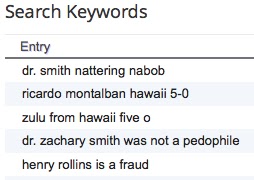
One week last month, these were the top searches leading here. 
 
I have never been so proud. It could have been better only if "jack lord fake name" and "joe dirt underrated masterpiece" also showed up. But about this list,...no, this poem,...I will not bemoan. I stand by it...at least until Mr. Rollins hunts me down and crushes me with his patented Bicep Vice-grip move. 


Wednesday, October 24, 2012

Rambo (part __)

Resplendent in Ralph Karen hand-woven headband, Rambo heads up river.
It was a summer evening in northeast Washington state, wavy heat rising from the pavement outside the hotel, where some channel had a Rambo marathon going on. I thought, "Great. I haven't procrastacriticized Rambo, and it's about freakin' time."

Then a couple of things happened to waylay me. One was learning that the Rambo I was watching was not from the '80's but a mere four years ago. But that wasn't what stopped me. It was learning the very next day that Stallone's son had died. Even though nobody looks at this blog, picking on the grieving seems mean even for a blog critic, so I gave it a break. I feel for him, and cannot imagine that kind of loss.

Rambo, however, is an imaginary guy, even more so than Rocky or Sly Stallone his own self. In the confusingly eponymous 4th episode (at least they decided to stop the even more confusing "First Blood Part __" titling), John Rambo is near Burma. Presumably in Thailand or Laos, although I could tell most Americans he was in Vietnam or Guyana and it would make no difference.

Now, he is a reclusive villager (a feat tat only w Westerner can pull off), spending his days catching snakes for the locals to use in their tourist shows, in a place where the rain only ever stops when he wants to do some face-acting. For some reason (I'm thinking it must be common sense), the locals prefer to have a crazed vet do their cobra-catching, and I even suspect that they invented the whole snake-show thing as a way to put this uninvited psychopath in harm's way, hoping the problem would solve itself. Instead, they end up having to complain that enough cobras are in custody, and they'd like to get some pythons; Rambo has been so effective a snake-catcher that the village is soon to be devoured by rats.

Admittedly, I an no expert in the economics of snake-catching, but I have to assume that the villagers are horrible snake-keepers or Rambo is secretly killing the serpents at night, because otherwise a once-daily snake show would not create sufficient demand for a snake-grabber bringing them new talent day after day, earning enough to afford a boat and nice archery gear. Unless, of course, the people really were trying to kill him and divvy up his stuff.

Or maybe he supplements his living by blacksmithing. John J Rambo, brooding and Thorish, pounding rebar into propellers. Later, as he prepares to do battle, he makes a machete. In a jungle country, where machetes are the single most common metal tool and the closest rebar is in Yangon, hmmm. Makes no sense, until you ponder the depth of the man's self-sufficiency, the scope of his killer artistry. No store-bought blade for him…not a chance. I can respect that.

So then along come the missionaries. The movie failed to portray them as being drawn to his snake-handling abilities, which was disappointing. Instead, they just want to sneak them into Burma to help tribespeople who are being persecuted because they are Christian (and oh yeah, the wrong ethnicity). Clean-cut do-gooders clearly disgust Rambo, who is too wise for that peace and love bullshit. The intensity of his dismissal, of course, can only signal a turn-around, and the fact that one of the missionaries is a pretty female can only mean that Rambo's heart will melt, and that we are all about to learn something.

What we viewers learn is that by 2008 the effects, if not particularly special, are more convincing than in First Blood Part I, or II, or probably even III. [Oh the redundancy, it reminds me of that time I saw in a friend's footlocker of porn the title "My First Time, Part II"?!] Every lead-hitting-flesh shot seems to be individually miked, and both the injuries and corpses seem more realistic than at the dawn of the Rambo Age. This installment reportedly has the highest body count of any in the series, and we are treated to everything from fresh dismemberment to pig-gnawed bodies to blowfly-bloated bodies. Two thumbs up for realistic carnage.

Not so much for the dialogue. Rambo remains speech impaired, and prone to saying things like:
"when you're pushed, killin's as easy as breathing'"
or
"there isn't one of us who doesn't wanna be somewhere else…but this is what we do...live for something, or die for nothing" (his longest speech, I think).

Rambo does not want to go with the woefully unprepared and naive Jesus freaks, and warns them against entering a war zone. Of course they do, and of course he ends up going in to save them, cajoled by their preacher (the White Shadow!) into joining a group of mercenaries hired with the job. Rambo is aloof, though, and clearly sees this whole episode as an imposition on his usual snake-catching gig; he is not  one with the mercenaries, and we see that he is better and wiser than they are.

Rambo guides his boat up-river to the…yawn…heart of darkness. There are no heads on sticks or acid trips, just some pirates with slow enough reflexes to be dispatched easily. The hot missionary's milquetoast guy friend objects to the killing, warning Rambo that he will report the murders, which we should all immediately recognize as foreshadowing to his subsequent bashing-in of a Burmese guy's head with a rock. With typical understatement, Rambo responds with"They would've raped her fifty times... and cut your fucking heads off! Who are you? Who are any of you?"

The whole movie is like this. Stallone recognizes hypocrisy and loathes it, but deals with it though subtle writerly devices like head-bashing and mass murder.  Or men of god who hire mercenaries, who turn out to be not that good at fighting. Oh, and of course the evil villain who wants to 'purify' Myanmar has a thing for young boys…genocide is not quite bad enough, so you gotta throw in some pedophiliac buggery to make it clear. I keep wondering what would have happened had a young Stallone been handed a dictionary instead of a copy of armaments catalogues and boxing videos; what if he had gone for a refined message, instead of escalating body counts?

At some point after said body count topping 200, after he gets to use his hand-forged blade on the evil Myamarmy, after he delivers the missionaries to safety (having taught them to not be so damned peaceful and self-righteous), we see that Rambo has finally made a breakthrough. He returns to Arizona to find his dad; he is ready to step out of the heart of darkness. Or maybe he's just tired of cobras, and wants to try his hand at rattlers.

Godspeed, John Rambo, Godspeed.

Saturday, September 8, 2012

Front Man Capitalism: Precrastacriticizing Henry Rollins

The Magnificent Creature known as Henry Rollins, bottom (Artist's conception by Coop)
Henry Rollins is a comin' to town soon, which means I should review the show several years from now, but this time I'm going precrastacritic, because I ain't going to the show anyway. May as well pre-judge (as per childhood religious training).

The reason I won't go see this icon of American Hardcore punk, this spokesman for the outsiders, is that he's gonna charge more than I've ever paid to see anything in Olympia, and has the gall to call his tour "Capitalism," in which he goes to the capital of each state (get it!? Pure Henry Gold) and talks about the injustices of capitalism that he has seen in his world travels.

People my age came to know Henry as the singer of Blag Flag, a seminal band which became that way under Dez, but hit punk fame (translation, suburban demi-rebels like myself were able to buy the album) when Damaged hit the record stores, overwrought Henry photo on the cover (he's punching a mirror!). Then he had to have a band named for himself, showed up on a bunch of cable shows and the movie blockbuster Jackass, did whatever it took to make a living without ending up as the burger flipper he sometimes says he was set up to be. 

But instead, he's a "spoken word artist," a phrase that, when translated from it's native Capitalistian, means, "I don't like sharing the take with a band, and I'm more of a visionary/poet/raconteur than a musician."

And I am supposed to pay five times what I would pay for a Fugazi show to take in this one guy, no smarter than Ian for sure, and without the music. He did promise Capitalism, so I guess I shouldn't complain.What sucks is the "I'm with the proletariat" conceit. I watched the video linked to at the calendar that announces hi Olympia show, sitting through  11 excruciating minutes of him talking about how his free-spiritedness and tough upbringing made him qualified to work in the service industry at minimum wage, and thus is my brother.

Bullshit, Henry Garfield (yup, Rollins is a made-up name). Were you street-wise, or a student at the elite Bullis School? Were you earning your blue collar cred while working at a Haagen Dazs ice cream store back when the name meant luxury to the rich, and a complete blank to the rest of us? You like to talk about how close you are to the edge, but you say you've been on tour more than 100 days this year, each time a few hundred people paying 25 bucks a pop to hear you claim that you're just a poor working stiff. 

But you're not cleaning piss in a public nursing facility, and you are not flipping burgers or even slinging yuppie ice cream. You are, as you mostly have been, starring in the Henry Show. Appearing and voicing over, DJ-ing and blogging. Lots of it at henryrollins.com (not .org, .net, or even .us, but .com, just to be clear), where the rest of us can also buy t-shirts with the Henry birth-date emblazoned on them, again for the low low price of $25. Ignoring for the moment the creepy cult-of-personality vibe of selling stuff celebrating the Adored One's date of issue, I'm sure that the reason the shirts cost so much is that they are made in a unionized American factory. 

To harp on the website a moment longer: why is Capitalism so much more evident than that there Freedom you claim to love and defend? The "Dispatch" blog allows no comment, no democratic feedback, and when I get to the "Contact" page, most of the addresses are for money stuff. The approach seems to be, "I am Henry. Now shut up and listen. Or buy something." I wonder too, how far your internet power extends, since I posted an abbreviated rant of this sort at the Olympia Film Society's page announcing your show, only to have it never appear.(Maybe there will be something tomorrow...I tried again.)


However, I do get to see this poster, featuring you as Uncle Sam, co-opting our nation's most scoldy icon to sell tickets. Clever, very clever. And better than that "I copied it from Johnny Rotten" crazy-eyed stare you do; the Uncle Sam pose demonsrates your versatility. Also, it's a welcome relief from the muscle guy stances you seem to favor, looking like Napoleon's Uncle Rico, only meaner. 

Meanwhile, you are making your way here as I pre-criticize. Honolulu to Anchorage to Olympia, and you've traveled all over in months and years preceding. Ergo the "Dispatches" trope on your .com website. We imagine tuning in to read your tales of exotic travel, global humanity, and regional complexities. But mostly there are plugs for your radio show and appearances. Since I know something about Honolulu, I was happy to see you posting from there, but was disappointed to see you only plug away and write boringly about the logistics of traveling shows. There was no there there. Not even any Henry there. If you just wanna phone it in, give up the blog and tweet.

The people who do go see you will enjoy it, probably ($25 is a powerful inducement to feign satisfaction for most of us, Henry). Hell, I enjoyed Black Flag (most recently a half hour ago, on the original vinyl), and actually would rather abide a show-boating, only slightly ripping-me-off guy who speaks out against corporate corruption than most of the alternatives. 

But your being a disingenius is bothersome. Why not admit you were born weller-off than many, that your service-working years were spent in an upscale establishment, or that maybe you got the gig with Black Flag because you had the resources and the parental indulgence to goto NY city to be at their shows for nights on end? People with publicists and booking agents are not your garden variety proles. It's OK, I'm too old and too employed by a state government to call you a Sellout. And if you priced your shows a bit more like Fugazi, I'd probably be among the appreciative crowd.

Thursday, March 22, 2012

Nemesis: Indiana Jones and the Raiders of the Lost Ark.


Ready, set, steal!

Even for a procrastinator, I've put off facing off with my nemesis long enough. So long I had to rent the movie to remember anything beyond the melting nazi (but not enough after that to suppress memory once more). Enough years between release and review for me to have kids who can mock the old-timeyness of the production values and special effects. Nearly long enough for the movie to meet the federal threshold for being historic.

Until such time as archaeologists can officially start considering the locations (AD 2031), they must satisfy themselves with the film. Raiders sits proudly astride the canon of Archaeology Training Films, if only because we cannot avoid it, along with Planet of the Apes (for the second smartest character in the movie, an archaeologist chimp, and of course for the material culture images from another branch of the primate evolutionary tree), Platoon (for the jungle-stalking hand gestures), and,...and some other stuff.

Archaeologists cannot escape Dr. Jones. People always ask where my whip is (I got your bullwhip right here, buddy), and about the hardest thing this non-conformist ever did was buy a hat that vaguely resembles what everyone thinks I am supposed to wear. [For the record, it is a locally made Filson, whose rain-shedding sun-shading
excellence makes the inevitable calls of "Hey, Indiana!" bearable.] Most Americans, and plenty of the rest of the world at this late date, know about as much about archaeology from the Indiana Jones movies as from anywhere else.

From the base of excavation to the top of the ivory tower, we archaeologists cringe at what the public thinks of us based on these blockbuster figments. Other than chrono-stupidity of biblical proportions ("Hey, you finding any dinosaurs?"), the perception that archaeologists hunt treasure ranks high among our existential banes. An interesting thing about the movie (oh yeah, I'm supposed to be writing a movie review) is that the protagonist is in fact presented as a procurer-for-hire, an expert in the occult, and to the extent he is a professor of archaeology at all, it is only so that he may cause coeds to swoon until he is called out on feats of daring-do. Neither 'raider' nor 'occulticist' has yet made it onto the list of sub-disciplines recognized by academe, and the fact that this flick shows him being recruited by spooks (who inexplicably demand to hold a top-secret conversation ins a large echo-ey hall) absolutely hammers home that Indy is to get the goods before the Germans, not stop and take notes, screen all the dirt, and all that other boring shit. Under no circumstances is he to waste time mapping a site, other than to find treasure. [Ahh, treasure, the worst of archaeotropes.]

There is, of course, a love interest, as is so often not the case for dedicated shovelbums, nomad-ing their way through their region of choice, living in cheap motels and on cheapskates' checks. No, it is not one of the college girls. Indiana Jones needs something more complex and mature than that: his professor's daughter. Who, I was surprised to learn upon consulting imdb, is not played by Deborah Winger. No, it is Karen Allen, who to my knowledge has never posed for a magazine spread french-kissing a dog, which helps distinguish her from Deb. Whoever it is, the character turns out to be a far more accurate take on an archaeologist man's mate: she can drink her weight in the alcohol of any nation, she looks good in a dress but prefers more practical wear, and she can hold her own in a fight. Come to think of it, those are also the qualifications for a pirate's girlfriend.

At this point in this post, I cannot see the sense in trying to summarize the action or the plot, or to aim for literary criticism. What's the value in pointing out that Natives are portrayed as bloodthirsty, Mestizos as duplicitous, African skippers as good-hearted slave-traders, and Arab shovelbums as cowardly buffoons? Or plodding my way through the large data set of un-archaeological actions, noting each and every professional and technical objection? [OK, maybe just one: after uttering the most hilarious line he gets--"Belloq's staff is too long"--Indy uses a staff that is even longer still, based on the units specified on the Staff of Ra, yet I am asked to suspend disbelief... Oh yeah, that's some prime geek-crit there.]

Belloq, the obligatory nemesis. Like all European stereotypes deployed for this film--the Frenchman is a conniving lightweight, the Nazi is enamored with sado-masochistic coat-hangers--his is entirely accurate. A bad guy not because he steals priceless cultural heritage, but because he steals it for the wrong people. At least he managed to convince those wrong people to make a pit stop on some island to engage in a fake Jewish ritual so that Indy and his androgynously-monikered Marion could have a conversation while tied up together, just before denouement. Unlike most US presidents, I have decided that the nemesis of my nemesis is not my friend.

Oh, Doc Jones, what am I to make of you? The franchise eventually had archaeologists doing all sorts of offensive things, from using femurs for torches to enrolling a spunky kid and an addled Sean Connery in his adventures. Oh, and most of all, making Indiana Jones and the Kingdom of the Crystal Skull...unforgivable. Snatching treasure you don't need, Harrison?

But on the other hand, there's Indiana Jones, making archaeology cool. Had Hollywood inexplicably portrayed archaeologists doing what they normally do: digging slowly, taking notes, spending untold hours weighing, illustrating, researching and writing,...if they'd showed all that, nobody would think our job is interesting. And Indiana Jones hates nazis, like most archaeologists; that's a good thing.

So yeah. Raiders of the Lost Ark kicked off one of those sprees that alters culture, that casts a type so solidly the populace cannot escape. Archaeologists are stuck with Indiana Jones like Nixon had Rich Little and comedians have Seinfeld. [Yes, there are more up-to-date analogs, but dammit, I am an archaeologist.]


Tuesday, November 29, 2011

Five-O's First Samurai


Samurai so suave
Ricardo Montalbanish
Not so Mount Fuji
-Amonymous

Yes, the very first samurai on Hawaii Five-Oh was Ricardo Montalban. Pretty much every mention I've seen of this episode dwells on the ethnic mismatch. But it's acting, fakery to begin with, and maybe this experience helped Ricardo in his masterful performance as a Space-Mongol years later. Any ethnicity can take on a poorly written part, but only Montalban is a master with the boquilla.

He plays Tokura, a mob boss whose past has come back to haunt him, in the form of 'bushido' bent on killing him. Turns out he was a mini-sub commander who landed on Moloka'i and sat out the war in safety. Actually, this is completely plausible. But then he somehow becomes a criminal kingpin samurai and nobody notices until 1968, when the assassins arrive to punish this cowardly enemy of honor.

He wields a mean boquilla, tries to be inscrutable, and steals the show from Lord. But in the end, Steve-o outwits Tokura, tricking him into confession and surrender by hiring a couple of Japanese extras to pretend to be killer bushido. The episode isn't that great, but of course it isn't that great, it's TV, it's Five-O. But to see Ichiban Montalban, this is where you gotta look.


.

Saturday, November 5, 2011

Danger, Will Robinson

Hi kids. Today we get Lost In Space. The show first appeared when I was an infant, so I know it from re-runs grown stale but not yet retro. Never was a huge fan, but there were time-slots in the viewing day when it beat the alternatives, and there was nothing else to do. In college, it seems like the Weird Uncles (me and my housemates) enjoyed it immensely for a while, there being over 80 episodes from it's mere three seasons, running in syndication over and over, replicating the strange DNA of the show for decades after it was canceled. Just as it's stray broadcast waves still seed the universe with some inkling of what we earthlings expect from interplanetary contact. (Ray-guns and wrestling for the most part, with occasional cuteness.)

Maybe it still appears somewhere in TV land, but I haven't set eyes on it since the '80s, have not heard Dr. Smith launch some crazy scheme for him and the boy, or hurl a good insult
at the robot. Some day, I'll netflix the show and remind myself of what exactly happened when the earth family Robinson was marooned in space, but why wait for data? Fuzzy recollections and IMDb are enough for now.

As I surfed through the actor profiles, I had to abandon my usual modus operandi: mocking the cast. I fall into snarcasm all too readily, but instead of finding has-beens and fools, I was faced with a collection of folks who went on to solid careers in and out of Hollywood, people who actually seem decent by normal standards (which may make them uncomfortably saintly in the entertainment industry, so I can see why none became blockbuster stars).

So, in no particular order (don't believe that, don't ever believe it when people claim that), here are the players:

The Star. Guy Williams was born Armando Something-or-other, but don't hold the name change against him. "Passing" was a widespread strategy not just for African-Americans in those days, but for all the others whose hyphenated-Americanity held them back; only by going from Italian to Anglo was he able to land the part of the Spaniard, Zorro. Armando recognized Lost In Space as the beginning of the end, and instead of going back to the kind of humiliating roles that somehow held promise to a young Guy--Bonzo's replacement Reagan, or Michael Landon's second banana--retired with his family to Argentina to live out life in a land he loved.

The Star's Wife. June Lockhart played the help-mate, her biology PhD applied to cooking and making space feel homey. Kinda like how she started out as Lassie's kid's mom, and to this day plays the familiar familial female. Without her, TV grinds to a halt.

Second Banana. In a strategic mis-maneuver that proved invaluable to the attentive writers of Star Trek, the premise of Lost in Space left the show without a continuing flow of yeomen to die on-planet, and the lusterless character of Major Don West was never killed, allowing Mark Goddard to collect a paycheck for three years. On the down-side, mid-1960s social mores did not allow him to diddle the only available female, so he did very little. He's spent many years since working with troubled kids, which seems like a way better investment of time.

Only Available Female. Marta Kristen studies acting, gets some parts, and lands a role on a prime-time show. In which she gets to do nothing. Eldest of the Robinson kids, but too old to be the sweet one and too blonde and female to be the brainy one, "Judy" lasted all three seasons because it was awkward to kill her off, and because network execs like her gams. She's spent many years since working with her own progeny, unfettered by stardom, which seems like a way better investment of time.

The Weird Girl. And now we enter the child actor zone. Angela Cartwright was the cute little kid on Danny Thomas's show (his own kid was busy working on her look for That Girl), and then one of the musically-talended, Nazi-evading, von-Trappes. My fuzzy recollection is of her character Penny having a pet chimp/alien, dreamily uttering lines that sounded like Alice in Wonderland (weirdly childish or else seriously drugged), and being less hot than the maddeningly under-scripted Judy Robinson. After a "Make Room for Daddy" revival in the early 1970s
failed (no kidding), she slipped through the looking glass and became a photographer.

Rounding out the Robinson family is the boy, Will, but we'll get back to him later.

Because first there's the character responsible for getting them lost in space, foreign agent Dr. Zachary Smith, whose attempted sabotage of the mission ends up with the ship off course and himself as unwilling stow-away. Instead of being killed immediately, he is saved, if only to provide a steady stream of zany plot lines. Played by another fake-namer, Jonathan Harris (nee Jonathan something too-Russian-and-Jewish for the '60s), the character was described then and now as flamboyant, campy, and effete...basically the arsenal of code words for "gay." But Dr. Smith, far from being gay (Major West received not so much as a longing glance asskance), was more of an ambiguous pedophile (back when such things were not frowned upon by stalwarts of American morality such as the clergy and football coaches). Dr. Smith's schemes always seemed to involve him and the boy sneaking off. By all accounts, Harris worked hard to breathe life into a character initially imagined as nothing more than a sniveling saboteur, good to revile for a few episodes before feeding to an alien of some sort.

Instead, tireless work by Mr Charasuchin-Harris yielded a character of thespianish grandiosity that gave the show a season or two more than it otherwise deserved. His conniving, mincing, rodential character concocting shcemes to get home or get rich, barking at the robot all manner of insults too clever to have been the work of the network hacks writing the episodes. It is a little known fact that the line "nattering nabob of negativism," which idiots attribute to Spiro Agnew and effete snobs to speechwriter William Safire (or by my fuzzy memory to Pat Buchanan), was originally uttered by Dr. Smith to the robot, who had objected to one of the good Doctor's wacky plans. For this, Jonathan was rewarded with nothing but type-casting, so much so that he pretty much moved into voice-over work.

The Robot. I'm pretty sure Robot was Japanese design, first to crack the post-war prejudice that "Made in Japan" meant crap (that's right, young people, people really did think that, before they actually got Japanese electronics, cameras, cars, and....robots). He was chaperone to the questionable jaunts of Dr. Smith and his youthful friend, perhaps the only one who prevented a Coach Sandusky situation from unfolding. Now you now why Robot was always saying "Danger, Will Robinson!"

Speaking of whom:

Will Robinson. Of all the cast, perhaps William Mumy's odd moniker offered the most excuse to change his name, but even as a kid was self-confident enough not to. In fact, he even kept the Will part. Smartest one on the ship (prequel to W. Stryker?), he also turns out to be a renaissance man in real life. He's written and recorded music (some on, yep, Renaissance Records) and scored movies and TV. He's responsible for the immortal "Fish Heads," and has written scripts and comic books ranging from the Marvel - DC superheroes to Trypto the Acid Dog. He's done a shitload of voice-over work, including Ren and Stimpy (but then, so has June). And he's married to the same person he was way back when, and has two kids who do not appear in tabloids. Damn!

So yeah, I'm glad I took the time to find out a little about the stars of this ill-fated galactic journey, even if I never got around to reviewing the show.

Wednesday, October 26, 2011

Kid Rock's Comeuppance: Joe Dirt

Mostly, my posts tend to be mean and sarcastic, or at best something akin to a hipster's glee in irony or camp. I pick on targets like Heston and Jack Lord (both incapable of doing any more than haunting me), movies that are unintentionally funny, not what I'd consider to be great entertainment or art.

So now, it's time for one that I consider a cinematic masterpiece. A movie released in the first year of the millenium: Joe Dirt. David Spade, casting aside his sarcastic schtick and small-guy side-kickery to play a pure and humble (and so temptingly mockable) hero on an epic quest, a zen master never cowed by life's indignities. A working man abused but never downtrodden, he is the cream of the 99%.

He is, of course, imaginary. The real Joe Dirts are locked up, burned out, or beaten down, but this guy comes straight out of the halcyon days of his ilk, keeps on keepin' on, crankin some tunes, and ultimately triumphing with his hemi. The exalted hemi, his favorite bands, the Auto Trader obsession, and all that shit was not intended as documentary, but captures a reality that does exist, or did anyway. While not forgetting to be hilarious. Not high-brow, understand (although some lines would work as New Yorker cartoons), but not overly dependent on farts either and above the crowd in terms of literalizing the "he's being shit on" theme. Seems like everything Joe says is something I heard in high school. Anyway, thanks Spade and Wolf for a kick-ass script.

Whoever cast this was right on. His small-town girl-next-door-friend is sweet and genuine (and extra authenticity points for casting a Brittany as a Brandy), and having Dennis Miller portray a self-adoring douchebag mock-jock inspired by Dirt's story to a patronizing dullness is pretty dead-on. One of my favorites among the human(ish) cast is Kid Rock playing grown "man" still going by Robby (another authentic name, and this time the "actor's" actual name, as opposed to his clever trade name). It is incredibly satisfying to see Kid Rock get his comeuppance in the movie, and also to realize that this was probably the acme of his career. Finding a dog with such elasticity is a coup, as well.

Speaking of which, this movie has the funniest dog-ball scene ever, tender in every sense of the word. [Not really, it is not at all like these tenders: boats, caretakers, or those weird little strips of chicken meat with a big tendon at one end.]

So I was watching this with my older kid, up til just before the sex (maybe sibling incest) scene, when she was shooed out. As some of you know from an early procrastacritique of mine, I am home-schooling her in sarcasm, and wanted to show her the particularly mean (and in my opinion, unworthy) brand of snarkasm Dennis Miller delivers so oilily. When he's playing Zander Kelly, I mean.

But because I'm a censorous old man, my daughter missed the best pose sequence this side of the collected stretches of Nacho Libre. Joe takes off his shirt and strikes every attitude of bad-ass nonchalance he can, in slow-mo, while a white trash hottie takes it in. He's the carny sex god, and for some reason his stances and expressions just crack me up to no end. [I swear it is a coincidence that I just happened to watch Zoolander, and I am not really obsessed with model-style sequences].

One of the first things people comment on with Joe Dirt (OK, maybe the only thing) is his mullet, so of course for me it will be last. The hair is cool and all, but it is a wig, whereas his facial hair is natural; he doesn't even have to shave. This trigger's Miller's best line, "
Now, you're telling me you were so ingrained with white trash DNA, your facial hair actually grows in on its own all white trashy like that?"

So. Joe Dirt. Ridiculous realism. The losers' winner. A story arc more than the sum of it's tangents. A movie here un-mocked.

Wednesday, October 12, 2011

Stone-Age Philly: Rocky I

[This is another post dredged up from my original blog, Mojourner Truth, and was originally entitled "Lithic I," due to my smartassociation and archaeologic.]

Sorry if you clicked on this looking for something on stones. I just didn't want to title this entry "Rocky I," even though that's what it is about. After making my near-teen kid watch Planet of the Apes by way of home-schooling her in sarcasm (see "Shallow Space Travel"), I figured a lesson on abject mockery was in order, in particular the iconic moments of Rocky that have sustained comedians for decades now.

As you may know, Rocky was the story of an exceptionally stupid and no longer very young boxer in Philadelphia who, against all odds, gets a shot at the heavyweight title of the world. (Why stupid? Maybe all the blows to the head, maybe the deadening effects of living in Philly, or maybe he was just a dumbass.) His best friend and mentor is a rubber ball whose cheerful acceptance of being slammed into the spit and velveeta-stained streets of the Philly slums provides the self-proclaimed Italian Stallion with his fighting strategy: take blows to the head until your opponent tires or dislocates something.

The champ that reaches into the City of Brotherly Love (lovingly shot in a palette of soot and carcass hues) and pulls out a smalltime leg-breaker for a sham battle resembles Muhammad Ali in some ways: black and beautiful (sorta), boastful and uppity (the late-70's was an era when white people bemoaned melanin run rampant in their sports world). But it being Hollywood, and a film released in the afterglow of the bicentennial, movie champ Apollo Creed is not a conscientious objector, but loves America so much that he wears red white and blue trunks, albeit in an uppity way. Later Rocky the champ will don similarly patriotic garb before defeating communism in the guise of a hulking nazi poster boy, but that's another tale.

Stallone, who wrote and starred in the movie (there was no director) and reportedly stitched together all the costumes as well, wanted to emphasize the value of individual will and hard work, so a fair amount of the movie focuses on his training, culminating in the flick's second most famous moment: Rocky in the same unwashed sweatsuit he's been wearing for weeks, heavily stained on the ass for some reason, charging up the stairs of the capitol and pumping his arms in the air [Yes, Internerd, I know the capitol's in Harrisburg, but Rocky thought it was the capitol.]

Anyway, Rocky runs, sweats, confides his insecurities to his rubber ball, maybe even abstains from sex, and punches beef carcasses (or, in Philly parlance, beats his meat), sometimes before cameras.

The cameras are there because this unlikely challenger has become a home-town hero. The white population of Philly, still years from their triumphant fire-bombing of black activists, seizes on Rocky as a punch-drunk messiah of sorts, or at least a working class hero (of a looser sort, given his joblessness).

And on a more intimate scale, Rocky has other supporters. Like plastic fish and turtle toys that he believes are pets, and feeds diligently. There's Paulie, a sloppy and sometimes violent drunk whose ethnicity is never directly mentioned, but who works for a meat company with an Irish name (to be fair, Sly scrawled unflattering stereotypes of Italian-Americans as well). There's the girl who sold him the pet food and is Paulie's sister, because anyone else would have alien and confusing to Rocky's addled mind. In a true Philly romance, he traps her in his filthy apartment, shows her is biceps and armpits, and she falls for him, or at least under him, making love on the floor among the roach-husks and mouse-turds. Finally, there's his manager, a guy who everyone calls Mick (probably not a Swede), but who is clearly a retired Penguin, embittered after being humiliated by Batman, jilted by the Riddler, and robbed blind by the Joker. Mick supports Rocky by yelling at him, which I guess makes him more of a father figure than the rubber ball, and by telling him "Stay away from women, they weaken the legs." (Luckily Rocky had that one brilliant moment and figured out the beef loophole.)

Then the fight itself, lovingly choreographed by, you guessed it, Stallone. Rocky leads off with the usual strategy of standing there and blocking punches with his face, but eventually he and his corner realize that compared to his usual experience with 3-round bouts, a 15 round prize fight is way more: the cut man thinks maybe 10 times more, Rocky says 100, while the Penguin spits in disgust and says "There ain't no such number that big, Rock," then jabs him in the nuts to perk him up for the next round.

Then this nobody lands a solid punch, knocking down the champ. What follows is a boring see-saw of desperation and triumph, hitting and getting hit, blood, spit, drool, and snot. The only real good part is when Rocky cannot see because his eye is swollen, and his manager wants him to quit, but he says "Cut it, Mick!" Oh, the mockery that line has fed. We used that line doing fieldwork all the time,and I suggest you do the same. It need not relate at all to what's happening; thus are the rules of Rocky's utterances.

So does he win? I dunno, maybe the movie does not say, or maybe I just didn't care. I was too caught up in the most famous moment of the movie, when he is done with the fight, and all the world is crowding into the ring, and Rocky keeps howling "Adrian!"

Adrian had been the name of his pet-shop girl, drunk-boy's sister. But that woman was poor, and based on her glasses and clothes was either a time traveler or some religious extremist who dressed as if the 1960s had never happened. The woman who comes to the ring has new clothes, uses rich-girl conditioner, and sees fine with no glasses. Adrienne, maybe, but not the same spinster he'd woo'd and screwed on the kitchen floor. In any case, a few seconds of celluloid killed off those names, maybe forever. Nobody from that point forward wanted to name their kid something that would be bawled loudly by people trying to act retarded. "Aaaa Dreee Uuuunnnnnn!!!"

So did my kid learn anything? Maybe, but probably not. She did stick it out 'til the very end, through 15 rounds of incomprehensible "dialogue," unlikelihoods galore, gore unbridled, Rocky's incontinence, and of course, my dumb comments. For with so little to work with, refined sarcasm is difficult, and mockery grows dull before long, which is why society as chosen two or three scenes to mock as shorthand for the entire movie, and why I went for the richer grounds of POTA first.

BONUS: That was it for the blog entry proper, but I cannot let this pass without mentioning that fact that the movie included among Apollo Creed's entourage none other than Arnold Johnson. Yeah, Putney Swope himself. Same suit, same beard, although the voice lacked the magic Swope. Sadly, I think that his tertiary sidekick role here was one of the biggest things to happen to him since he starred as the revolutionary advertiser a decade earlier, maybe his last movie appearance. He showed up in episodes of The Jeffersons and Sanford and Son, and after exhausting the 'black' shows, appeared in other shows in the only roles available to bearded African Americans: old men and drunks. Although he did appear in several episodes of Hill Street Blues, it was never in a major role, and unlike Rocky he never got a real championship shot.

Wednesday, September 28, 2011

Of Great Names and Squealing Tires: Hawaii Five-O "Twenty-four Carat Kill"

OK, honestly I don't remember the episode in any great detail, but a swaggering smuggler, a crooked lawyer, and the local Chinese mafia engage in a futile attempt to smuggle gold under McGarrett's chiseled nose. They tip him off by killing someone. I remember being a kid and hearing that Five-O was the most violent show on television for the nth year in a row, but it wasn't long before even a doddering Lansbury couldn't justify a show without a body or two.

This is my first Five-O post, so I just want to say a big mahalo to the cast. Not for their performance, but for their names. Jack Lord!? And I though King of Pop Michael Jackson was pretentious. I guess he wanted to trim down John Joseph Patrick Ryan, which is what his mom called him. Meanwhile, James MacArthur takes on "Danny," which the Lord commandeth, lo that Dano's Irishness might divert attention from his own. Ever the self-hating boy bent on passing for a Scot, Lord also insisted that local actor Kam Fong be cast as Officer Kelly, a besotten buffoon and butt of jokes. The eventual compromise starred Fong as Chin Ho Kelly, one of the best Irish Cop Names I've ever heard. Then there's Kono, a made-up Hawaiian name played by the actual Zulu (a made up name for a Hawaiian).

And that's just the regulars. This episode has a villain named Johnny Fargo, which just rolls off the tongue and would be fine on its own, but the actor's name is Kaz Garas, which is even awesomer. I am sitting here now repeating each name again and again, with '40s gangster flair. For some reason, Johnny's scheme involves spending 250 grand on a tuna boat so he can catch aku, go pick up gold bars from under a buoy, stuff them in the fish, offload the fish at a dock a quarter mile away, and drive them somewhere to gut the gold out of 'em. Seems more complicated than just walking off a fishing boat with a duffle bag, since there's no customs inspection, but I guess then that nice Chinese girl wouldn't have accidentally bought one of those fish and gotten herself killed to kick off the episode.

But man, things get crazy when you're dealing with gold. I mean, the stuff was worth 35 bucks an ounce, which was the legally mandated price back then for gold and marijuana (now gold is going for about $1625, and marijuana for I have no idea how much). So Fargo needs upwards of four tons of gold to make any money after the boat, crew, buying off the cannery workers, and so on.

Johnny has not only a leaky scheme, but a weakness for the ladies, and so McGarrett, after first angrily yelling "Uh-uh, no dames!" allows Andrea, played by Marj Dusay (yeah, another incredible name, ending in a j and a y must've made her autographs look very fancy) to go undercover as a sophisticated, high-class criminal, and of course Johnny gets a load of those gams and falls right into her trap. As you may already have guessed, Dusay was born Marjorie Ellen Pavonka Mahoney, of the Kansas Mahoneys. Jack Lord thought she was a looker, and after a private interview in his suite agreed to let her hide her Irishness.

The names are great, and there are various things to love about the series, but what makes this episode really stand out is that it contains what may be the finest example of tire-squealing in the Golden Age of Tire Squealing. Even though she's been taken hostage by Johnny, Andrea has a beacon that guides Five-O (they are psychic, and can discern from the dash-mounted red light exactly where she's headed) on a chase that winds up and then down a high-rise parking structure. I think it goes on for a minute and a half or so. Squeal after squeal after squeal, non-stop excitement.

I'm guessing they had some time to fill. Besides, TV then and ever after has understood that parking garages make great locations: controlled access, brutalist architectural lines, squealy surfaces, and no civilians accidentally walking a scene or weather changes messing with continuity. Five-O sure loved a good garage chase, but would dub in squealing tires everywhere, even on loose gravel or cane roads. McGarrett works directly for the Governor, and goes nowhere slowly, pal.

The show tore on for another 12 years, and no doubt there will be more posts. But for now, I must salute squealing tires, the crypto-Irish diaspora, and $35/ounce gold.

Omigod Man: Omega Man

Aside from the online POTA (Planet of the Apes) crowd, almost nobody looks to me for film criticism. Maybe because I know so little, and don't know any of the names to drop or references to make. Also, I like to review movies way after they come out; I'm averaging nearly 4 decades after release, for I am The Procrastacritic.

In 1970 (+/-3), Heston embarked on a trio (plus the POTA sequel, if you wanna count that, which I don't) of sci-fi flicks, each set in an earthly future rendered dark and dystopian by human folly: the Hestopian Trilogy. Planet of the Apes kicked it off, and Soylent Green finished it. In my usual shiftless way I arrive last at the middle: Omega Man, a post-apocalyptic costume drama. Like the others in this triptych of hubristic humanity gone awry, OM returns to certain aspects of the species Homo hestonii: his journey from adventurous gay man to abusive heterosexual, pathological criminalism, and race relations.

We begin with the decked out in sweaty suave, epaulettes rippling in the breeze as he speeds though an abandoned city in a big red caddy (Hunter Thompson appropriated the caddy and sense of doom for Fear and Loathing in Las Vegas). The stylish safari look was judged just right for the character, Robert Neville, indulging in his twin passions of looting and shooting, and was so popular with audiences that studio execs green-lighted the epaulettes' re-appearance in Soylent Green.

He is alone, Colonel Neville, the reward and curse for having saved himself from a man-made plague while all around him perished (not having had the Hestonian wisdom to be germ warfare scientists themselves). Now, he must spend days hunting down and killing zombies. At night, he plays chess with a bust of Julius Caesar, and furthers the costume aspect of the movie by saying "I dress for dinner on Sundays," sporting a green velour jacket and ruffled blouses.

But let us not dwell on sartoriality, let us get to the point of the movie, which is…I'm not sure. So why not just make fun of the oddities? Three years after everyone died and presumably failed to produce more food, and Neville's got a fresh fruit platter and a string of bratwurst; there's always ice in the silver bucket. Car and flashlight batteries remain fresh forever in this miraculous world, different than the 1978 I lived through, where we had crappy batteries that lasted six months. Finally, in a world full of stores, Heston's natural looting mania seems to be focused mainly on clothes, expressing his every mood (to whom?) with a new outfit for every occasion.

Then there's The Family, a multiracial zombie-ish coven (disaster strikes a few years after the big race riots, so of course the first thing the survivors to is get together in harmony, right?). Well, almost harmony, because the black guy in The Family is dishonest and violent. So much for progess: the innovation of the movie is to have black people in white-face make-up. The strangest thing is that after three years of intensive searching, Neville has not found them, even though the first kid he meets knows exactly where they are.

He(ston) wants to root out their nest, kill them all before they kill him. Were they really trying to kill him before he took to shooting them on sight? I'm not so sure, but as usual when encountering the Other in Hestopia, the only solution is to shoot, for god's sake, SHOOT! Oh, and drive like a fucking maniac (because when you are the last man on earth, every car is a rental). Costume-wise: he usually chooses something militaryey looking for ops like this, like when time was of the essence and he managed to slip into a form-fitting blue rayon flight suit.

Eventually, Neville trips across a group of survivor children (awww), protected by an aspiring germ warfare doctor (no, no stretching the limits of plausibility there), who he should have taught how to make the anti-zombification serum. But instead, he goes to the only other healthy adult, so that he can have The Kiss That Changed The World (sorta,...OK, not really).

For she is African American. Yeah. And Chuck Heston is as white a Moses as you'll ever see. Of course, this shocking romance occurred years after Poitier and Hepburn had made the move on the big screen; even Shatner and Uhuru had blazed the trail on TV while Heston was avoiding women altogether on POTA. So Omega Man kisses a black woman, subject to certain rules: there must be a false start, the kiss itself must not be lit well enough to see, and she must die before there is an issue with, uh, shall we say, issue. The costume for this scene is an pirate shirt with understated puffy sleeves.

If I don't understand what this movie is about, it's not for lack of trying by the authors and director, who beat me about the head and neck with symbolism. They foreshadow and then at the end indulge in crucifixion, savior Neville arms asplay, passing a vial of his own blood to the future that they might be saved zombification by the Pharisees or Pagans, or whoever those anti germ warfare freaks are.

Soylent Greenbacks: Soylent Green Part 2

Somehow in the last post, which you should be reading first, I got off track. Watching the movie, knowing the secret ahead of time, the characters' anguish and shock seemed overdone. But then, I've forgotten what life was like before Reagan (our most Hestonian president, I'd say, with that veneer of smiling good nature and great hair over a dickish soul and addled mind), and worse yet Mr. New World Order. As Saul says, we had a world once,...schmuck.

But even in those kinder, gentler days before the Bush Dynasty ascended, people should have understood that in a movie where the premise is that the world is way overpopulated and food is hard to come by, there's gonna be some cannibalism. It's happened with boats and plains and wagon trains full of hungry people, and for that matter probably happens in New York city from time to time anyway.

Maybe I'm jaded by years of living under unbridled and bloodthirsty capitalism, but it also makes sense that a large corporation would pounce on the obvious profit potential in this movie world. A steady supply of willing flesh, a vast pool of consumers hungry for protein, yearning for a new product. As businessmen are so fond of saying, it's a no-brainer.

Soylent Green saw this future coming. Like all tales of the future, it is doomed to looking stupid on some levels: the lame-ass video game would have fallen prey to this in less than a decade, there are no Latinos, and the guns are pitiful little toys. On the other hand, we're well on the way to being a plutocracy, run by a few ruthless people who live in a level of wealth unimaginable to the unwashed masses. Officials who use their position to enrich themselves and appropriate other people's stuff? Yep. Corporations using public resources to enhance profitability (where do you think the Riot Patrol scoopers dump their haul?) and shaping public policy to their liking? Yep. High-powered politicians drawn from the ranks of the wealthy? Yep. Public sector workers not paid a decent wage? Yep. Corruption, dehumanization, women treated as furniture? Yep, yep, and yep.

I heard about a scientific study recently in which burgers from 6 corporate chains were tested, and it was found that they contained between 2 and 15% meat. Slightly more if you count guts and parasites, but basically a Soylent Gray disk. I haven't eaten that crap in years, but in large urban centers, it accounts for a large portion of the menu for those who cannot afford to have luxuries like fresh vegetables. I don't think it has yet become profitable to include human meat, but don't expect Archer Daniels Midland to tell you when that happens. They and the other food-stuff mega corporations may well have nicely bound feasibility studies already on the shelves, just like in the movie.

Which brings to mind a flaw. I can understand the guy from state security hiring a patsy to murder a conspirator who might not be reliable, but to think that they'd leave the investigation to a detective who is not also part of the operation boggles the mind. The bodyguard did not sweep out the books and any other incriminating evidence or kill the priest moments after he heard confession form the Man Who Knew Too Much. Amateurs. Bush I or Cheney would have disappeared the killer, bodyguard, priest and furniture immediately, would have put their own guy on the case; nobody, least of all some rabble rouser, would have ever known about the murder or the greater crime of mass cannibalism.

If word ever did get out, they'd put the media to work explaining that Soylent Green is as American as apple pie (or at least mock apple pie made with pancreas instead of those horrible ritz crackers). They'd have paraded out McCain, who would explain that he took up cannibalism out of necessity in Hanoi, but kept up with it for the pure gustatory pleasure. There would be a new ad campaign on the theme "Soylent Green is People," showing the smiling faces of the diverse Soylent workforce, appropriating and deflating the critique. Anti-cannibals would be branded as socialists and homos, marginalized, and if that didn't work, scooped up by the riot patrol and delivered to the Gitmo Processing Plant.

The voluntary suicide center would be different, too. None of this druidic robe stuff, a final film dwelling on nature. There'd be a big cross. You'd be strapped to the gurney so that you could not escape when you figured out they were lying about giving you the full 20 minutes of nice movie. Fawning Dick Van Patten manning the gates, allowing himself to be pushed around by a half-fed local cop? Hell no: a Blackwater crew, tossing the bullet-riddled bodies of interlocutors into the hopper.

The process, the conveyors and trucks and machines that transport and transform bodies into Soylent Green, appears a little silly now. Bodies given the dignity of a clean white sheet through the whole process? Maybe in the first week of operation, but soon enough some manager would get himself a promotion by figuring out that eliminating the sheets would increase the profit margin, another would move up after devising a streamlined process for gold tooth extraction. Likewise, once the suicider has signed on the dotted line, amenities are unnecessary and a waste. No self-respecting corporation in 2011, much less 2022, would want to justify the expense to shareholders anxious about meeting quarterly projections.

In 1963, Heston marched with Dr. King and advocated for civil rights. In 1973, he seemed outraged by what the Soylent Corp was doing. In 1983, he'd changed his tune, and by '93 was excoriating the pinkos who would dare badmouth the poor maligned white male. As Heston went, so too did the leadership of our country. Less and less concerned with any right but the right to bear arms, more and more demented. Unwilling to let anything stand in the way of the march toward complete corporate domination of the economy and society. Growing Mosaic in his devotion to the one true god (with his three faces: father, son, and holy cash flow), and disgusted by the humanists.

Soylent Greenbacks are made of people.